Binance Returned an Error. Should Your Bot Retry the Order?
Binance returned an error, but the order may still exist. Pause, query, and reconcile before your bot retries.
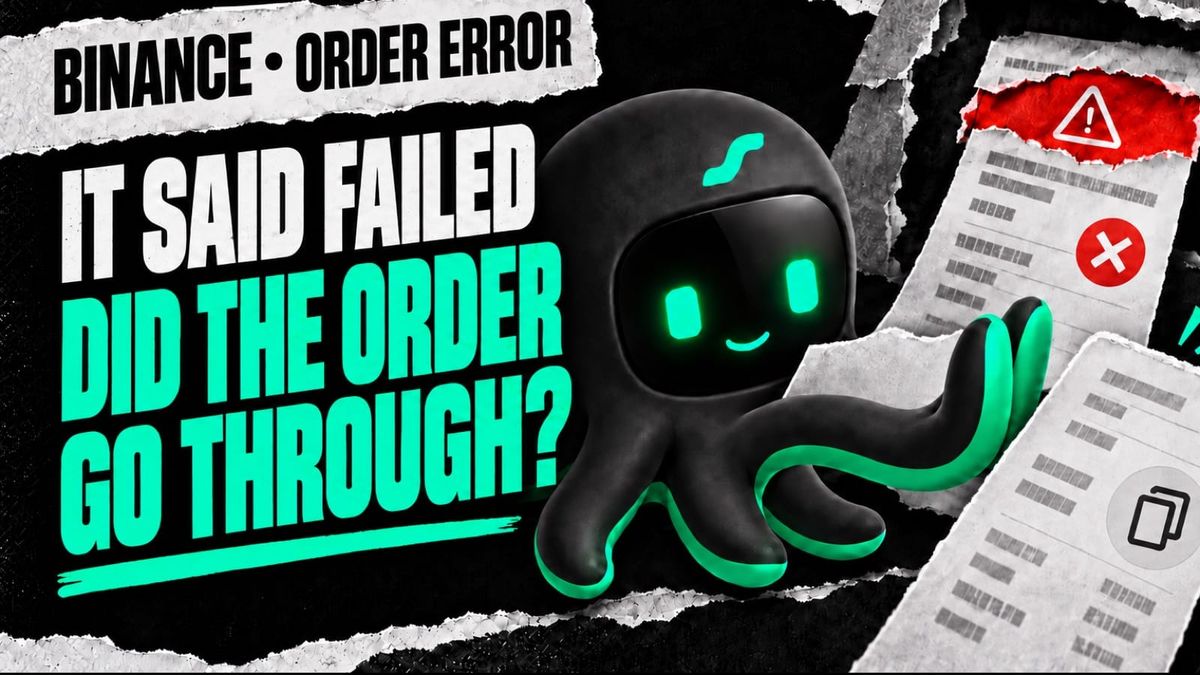
Binance says “order failed,” so the bot immediately sends another. Seconds later the page recovers—and both orders exist. The nasty part is simple: “I did not receive the result” is not the same as “the exchange did not receive the order.” This article shows when to stop, query, and reconcile.
An error message is not always an order rejection
An order makes two trips: the request reaches the exchange, then the result travels back. The exchange may accept the order while the return message disappears. Your program sees red; the market may already have the order.
Developers group many server-side HTTP errors under 5xx, meaning status codes 500–599. Binance’s official Spot REST API documentation warns that a 5XX response must not be treated as a failed operation: execution status may be UNKNOWN, and the operation may still have succeeded. The name matters less than the situation: unknown result does not mean no result.
The most dangerous automation looks productive
server error → send another orderThis skips the only useful question: does the first order exist? If yes, retry is not recovery. It is new exposure with excellent customer service.
Stop, query, reconcile—then decide
- Give each trading intent a unique identifier.
- After a timeout or server error, block another submission for that intent.
- Query the original order by client identifier or exchange order ID.
- Reconcile open orders, history, fills, and balance changes.
- Resubmit only after confirming the original does not exist.
If the state remains unclear, stop adding risk and escalate for review. A retry loop should not vote on position size.
Mature automation knows when to stop talking
Stable client identifiers, reliable queries, and complete state records make automated recovery possible. Remove one, and the system should become more conservative.
Maturity is not running forever. It is admitting when the machine does not know.
Why an agent-native workflow helps
Many scripts treat each request as an isolated event. An agent-native workflow can keep intent, request, response, reconciliation, and final position in one task. In supported environments, EdgePilot Live preserves run and order materials; exchange confirmation remains the final authority.
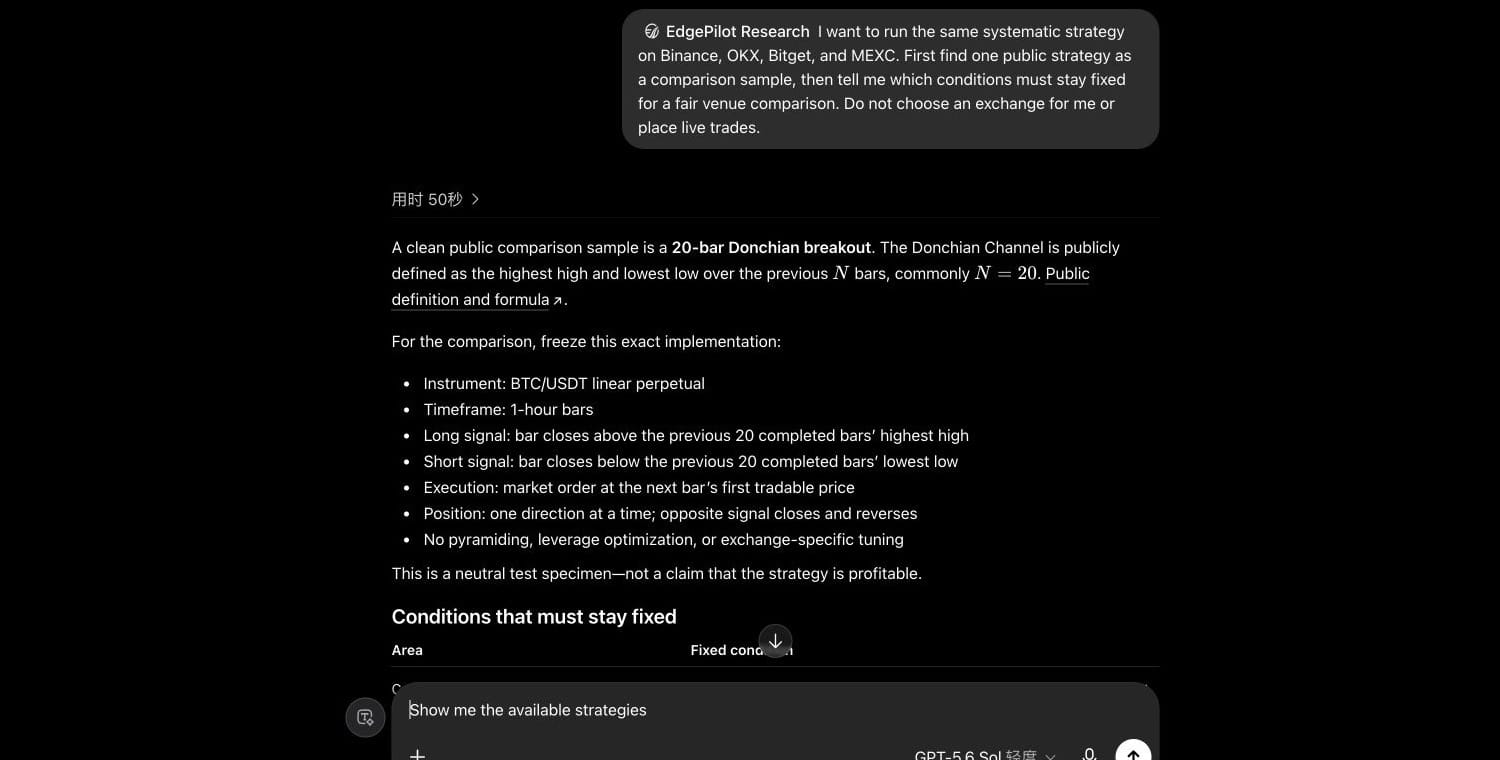
Sometimes the smartest response to “failed” is not retry. It is reconciliation. Red text may vanish. Duplicate exposure will not apologize.
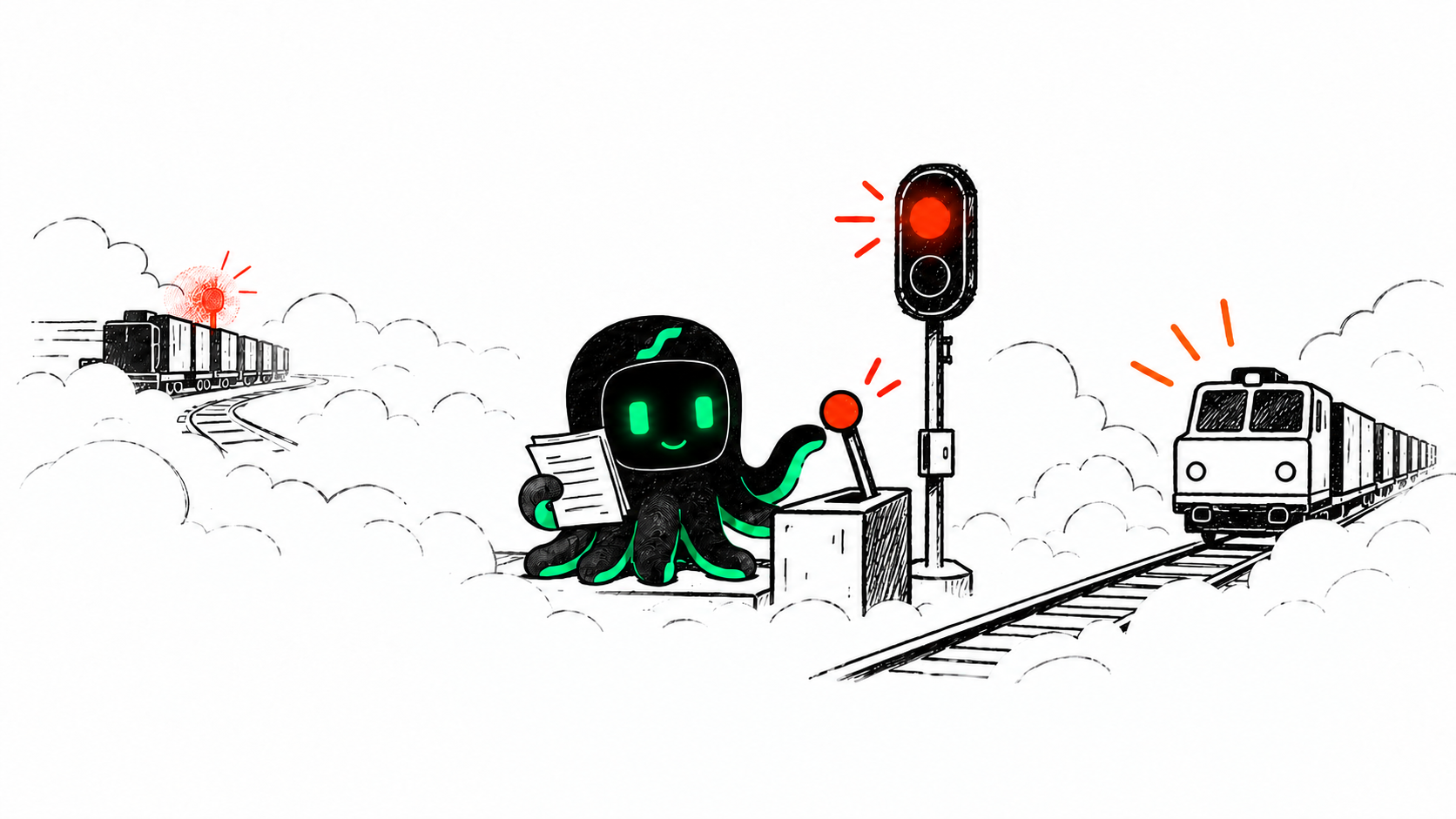
Next step: Query the original order before retrying
For the execution setup, see EdgePilot Live’s operating guide. Start by checking supported markets, permissions, and the selected mode before running a strategy.
Once the original order is accounted for, check whether the venue fits your execution requirements. Moving from a test account? Use the demo-to-live checklist to separate order-state problems from environment mismatches.
Sources
This article is for trading research and software-testing education, not investment advice. Exchange rules, regional availability, and interface capabilities can change; verify current official documentation before execution.