Why the Same Grid Changes Across Binance, OKX, Bitget, and Gate.io
Same parameters do not mean same orders. Minimums, tick sizes, fees, and fills can turn one grid into four outcomes.
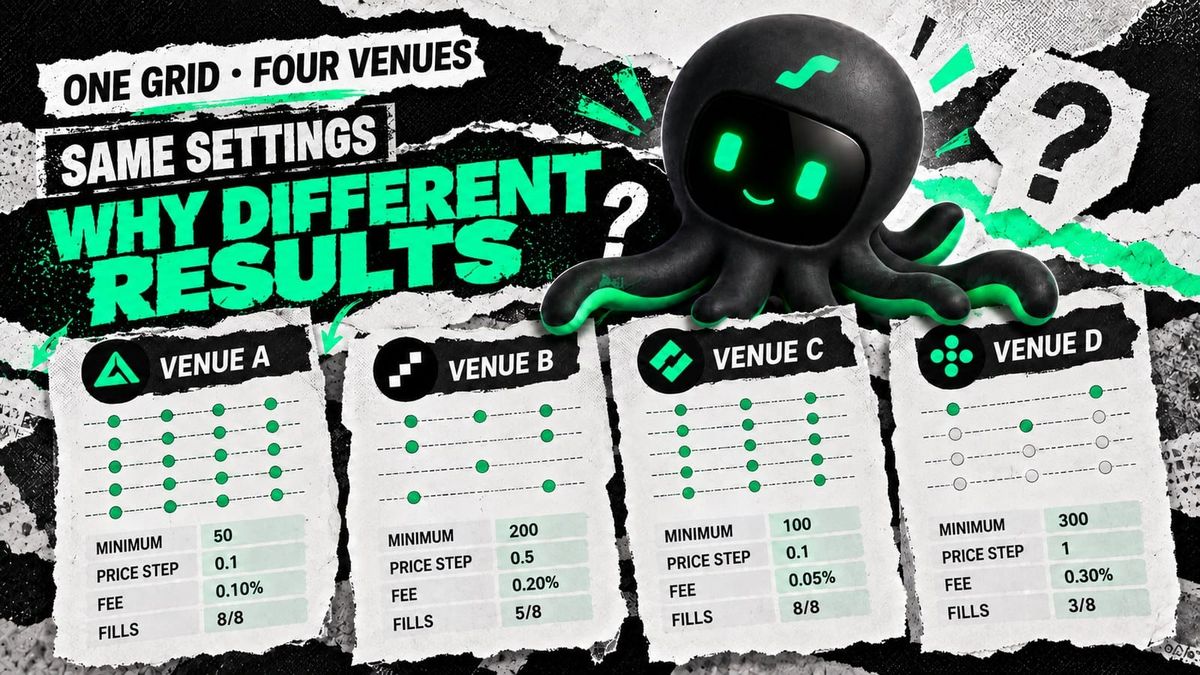
You copy the same grid settings to four venues. One accepts every order, one rejects a level, one rounds the size, and another lets fees eat half the grid profit. The parameters stayed still; the execution rules did not. Here are the four places where a fair comparison quietly stops being fair.
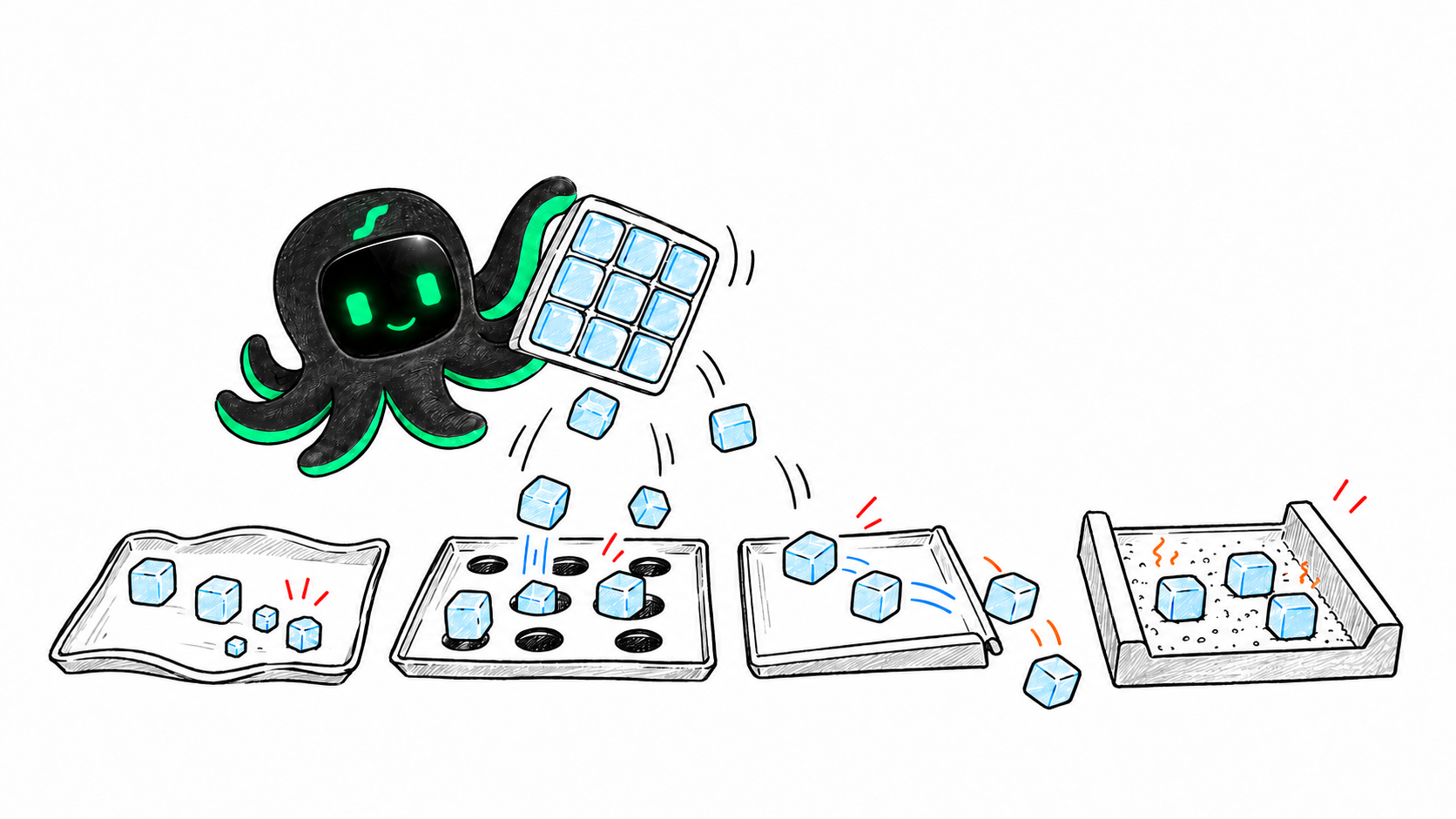
One recipe, four kitchens, four plates
Split 1,000 USDT into 20 levels and each gets 50 USDT on paper. The venue still rounds price and quantity and checks minimum size and notional.
The same level may be accepted, rejected, or resized. Binance documents versions of these constraints as price, lot-size, and notional filters. The language is technical; the rule is familiar: if it does not fit the kitchen, it does not leave the kitchen.
The lowest fee does not guarantee the lowest bill
Maker fee is one line. Spread, liquidity, queue position, partial fills, and cancels also take bites from each grid level.
A cheaper fee with consistently worse fills can return the savings through execution. Choosing a venue by fee alone is like choosing a restaurant because napkins are free.
Lock the variables that can cheat
| Fix or record | What it changes |
|---|---|
| Tick and quantity step | Grid levels and actual size |
| Minimum order value | Small-account viability |
| Fee, spread, slippage | Net result per level |
| Partial fills and cancels | Inventory drift |
Freeze code, range, capital, and signals. Replace only venue rules and costs the account can actually receive. Comparing VIP pricing on one venue with retail pricing on another is science conducted by the home team's referee.
Run a comparison that cannot flatter itself
- Freeze strategy version, grid settings, and period.
- Save each venue's current rules and account fee tier.
- Record rejects, rounded orders, and actual costs.
- Compare fills, inventory drift, drawdown, and after-fee results.
- Add an adverse case such as wider spread or fewer fills.
Put all four kitchens on one bill
EdgePilot Research can run historical tests for supported strategies and preserve version, parameters, market, and fee configuration. That turns “this venue feels better” into “which rule changed the result under fixed conditions?” Live connectivity still needs verification against supported environments.
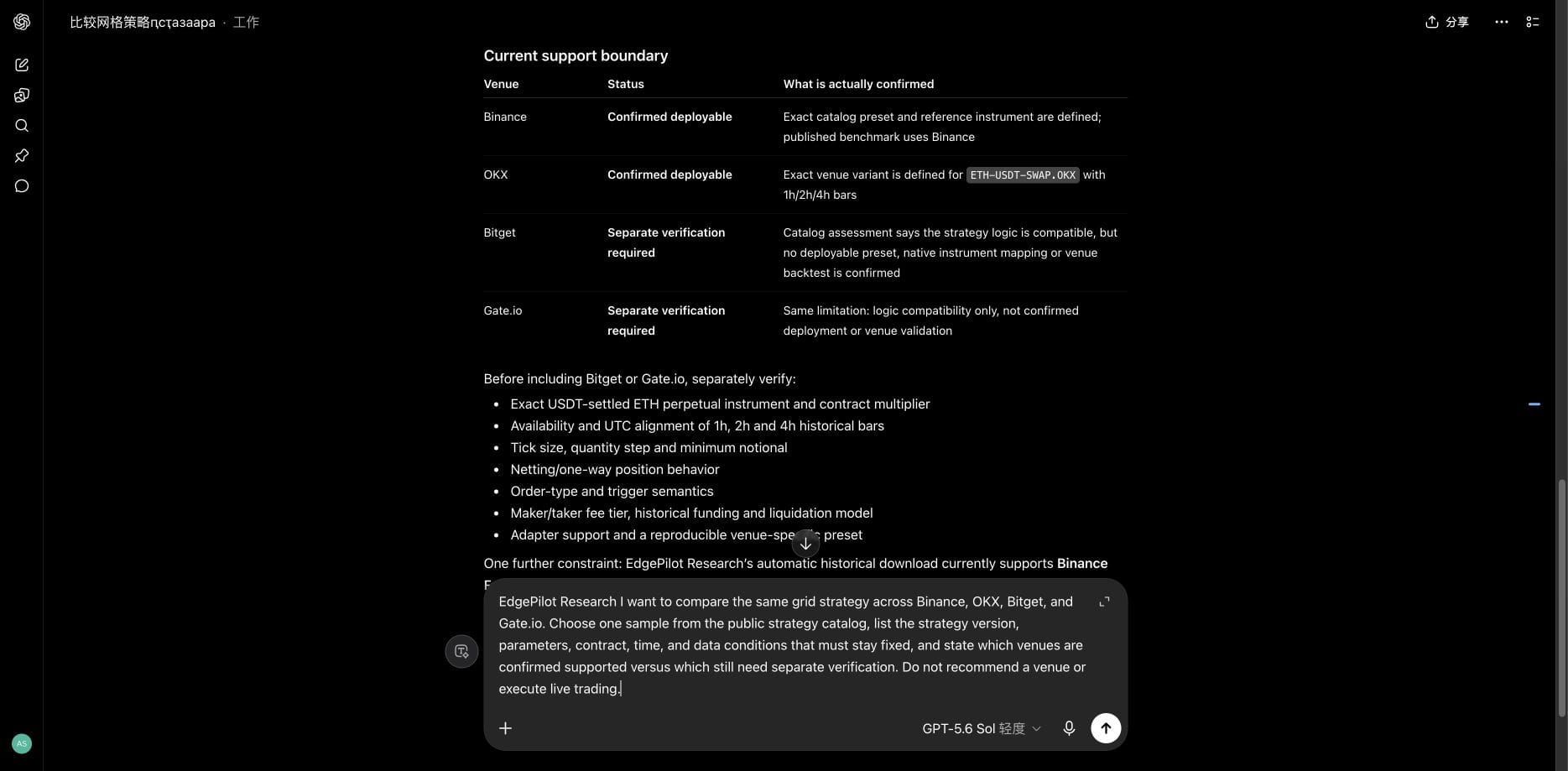
A copied grid is not automatically the same dish. Parameters are the recipe. Venue rules are the kitchen.
Next step: Freeze conditions and compare four venues
Use EdgePilot Research to organize this validation. Test the one condition most likely to change the decision before comparing twenty dimensions.
If venue rules change the result, compare which exchange fits your strategy. If the grid still trades but earns less, work through the full trading-cost breakdown before changing its settings.
Sources
This article is for trading research and software-testing education, not investment advice. Exchange rules, regional availability, and interface capabilities can change; verify current official documentation before execution.